
Reverse Engineering & Modeling: Asset Resurrection
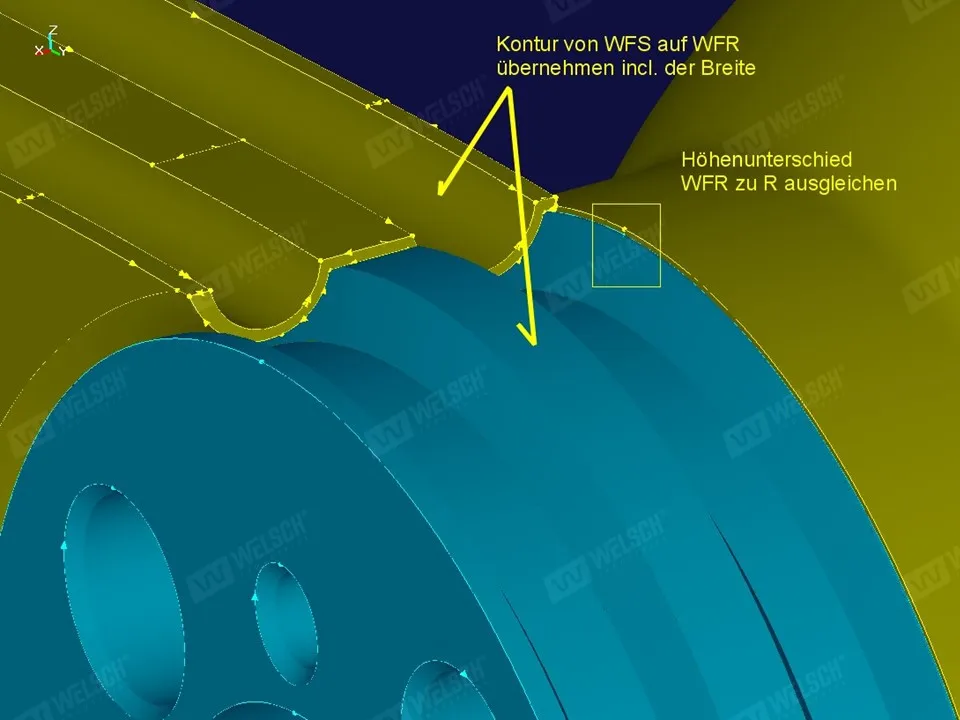
Description
In the global concrete roof tile industry, many high-performance plants operate with "orphaned" machinery, complex assets that lack original documentation or are no longer supported by the initial manufacturer. Reverse Engineering and Modeling is the WELSCH solution for bridging the gap between legacy hardware and modern digital engineering. We provide a forensic path to recover, optimize, and document your critical infrastructure, regardless of its origin.
Standard reverse engineering often results in dumb static models. WELSCH applies a sophisticated design strategy that links physical measurements with industrial logic. We don't just replicate a part; we analyze its surgical intent:
Parametric Volume Modeling: We generate non-parametric, semi-parametric, or fully parametric volume models. This means the resulting digital files are alive -- they contain the technical dependencies and design history required for future modifications and optimizations.
Functional Integration: We link captured geometrical data with material information, functionality, and technology data. This ensures that the reverse-engineered component performs with calculated certainty within the specific kinematic constraints of your machine.
Our reverse engineering process is backed by the WELSCH house-internal laboratory, allowing for a level of precision that exceeds standard field measurements:
Non-Contact 3D Scanning: Utilizing a 7-axis laser scanner (accuracy 50 um) and a mobile measuring arm, we capture complex shaped objects and organic contours in a 4.8-meter working space. This is essential for digitizing worn components like Slipper Bodies or Roller Segments.
Spectrometer Material Analysis: To ensure the longevity of the new part, we perform Optical Emission Spectrometry (OES) to identify the exact chemical composition of the original steel. We analyze 14 elements, including traces of Carbon and Nitrogen, to ensure we specify a material that meets or exceeds the original's wear resistance.
Tactile Coordinate Measuring: For solid objects requiring verification of shape and position tolerances, we utilize our laboratory portal device with probing deviations as low as 1.3 um.
We specialize in Hybrid Modeling, where we fuse classic design techniques with 3D freeform modeling and forensic data. This allows us to clean a worn component, removing the effects of years of abrasion in the digital model, to return the part to its original "Better-Than-New" dimensions.
Universal Data Conversion: We eliminate "Software Lock-in." Whether your plant uses UniGraphics (Siemens NX), Pro/Engineer, Inventor, or SolidWorks, we can export native or neutral data (STEP, IGES, STL, VDA, DXF, DWG) that integrates perfectly with your existing systems.
Comprehensive Documentation: Every reverse engineering project concludes with the provision of full Technical Illustrations, including exploded views and detailed assembly drawings, ensuring your maintenance team has the visual intelligence they need for the next 20 years.
Technical-Commercial ROI -- Eliminating OEM Dependency: Reduce Lead Times by eliminating the 6-month wait times often associated with OEM spare parts. Lower Costs by providing technical drawings and BOMs, so you can utilize your Strategic Manufacturing Circle or local vendors for production. Metallurgical Upgrading: We often identify that the original parts failed due to poor material choice. We use our lab data to suggest superior alloys, extending the lifecycle of the component and reducing your TCO.
Reverse Engineering is the ultimate tool for sustainability. Instead of scrapping an entire machine because a single proprietary part is unavailable, we surgically recreate the technical DNA of your asset, ensuring its continued profitability in an evolving market.
Technical Features
- 7-axis laser scanner with 50 um accuracy in 4.8 m workspace
- Spectrometer material analysis (OES) of 14 elements
- Tactile coordinate measuring with 1.3 um probing deviation
- Parametric volume modeling with design history
- Universal CAD data conversion eliminating software lock-in
- Complete technical documentation with exploded views
- Metallurgical upgrading for Better-Than-New components
These products are customized solutions tailored precisely to your individual requirements. Contact us for personal consultation.
Frequently Asked Questions
Have Questions?
Our team of experts will be happy to advise you on this product.
At a Glance
- Custom manufacturing
- Made in Germany
- Worldwide shipping
- Technical support